 Emergency Call
  Monday to Friday - 08:00 - 20:00


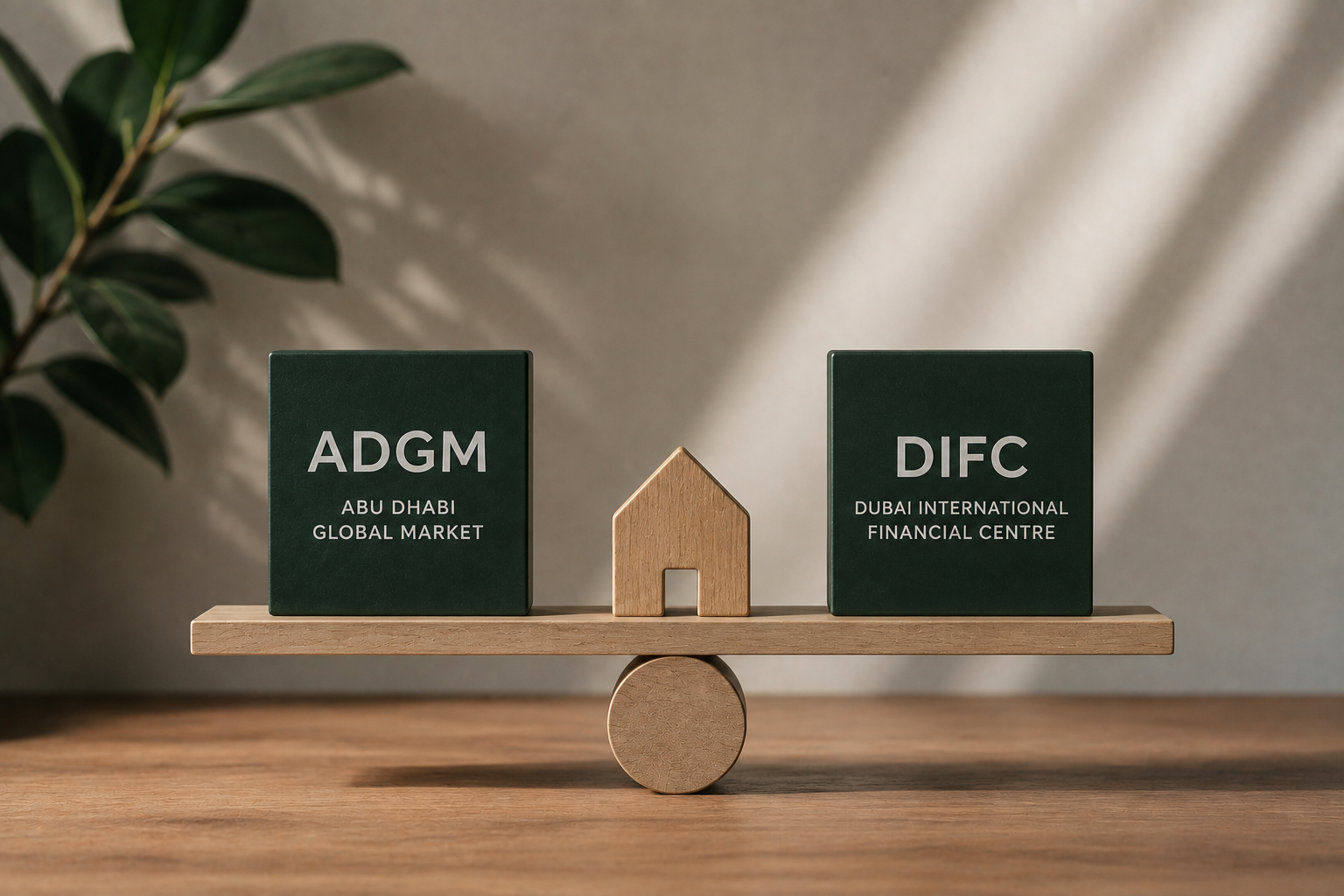
Setting Up a “Holding Co” in ADGM vs. DIFC
Which Is Better for Asset Protection?
In 2026, choosing between the Abu Dhabi Global Market and the Dubai International Financial Centre is no longer a branding decision.
It’s a legal strategy.
For international founders, family offices, crypto investors, and cross-border entrepreneurs, a UAE Holding Company is no longer just a passive ownership vehicle. It has become the core “control layer” for:
-
Protecting wealth,
-
Managing international tax exposure,
-
Shielding intellectual property,
-
Structuring exits,
-
and reducing probate risks across multiple jurisdictions.
But here’s where most founders make a costly mistake:
They assume all UAE “offshore” structures work the same way.
They don’t.
In 2026, the legal architecture behind your Holding Company matters more than the trade license itself. The wrong jurisdiction can weaken your asset protection strategy, complicate banking, or expose your structure to foreign tax authorities like HMRC.
The right one can become the backbone of a globally defensible wealth structure.
1. The Core Difference: ADGM Uses English Law Directly
This is the single biggest structural distinction between ADGM and DIFC.
ADGM: Direct Adoption of English Common Law
Abu Dhabi Global Market directly applies English Common Law through the English Law Regulations 2015.
That means:
-
English legal precedents can apply automatically,
-
international banks immediately understand the framework,
-
and foreign courts often recognize ADGM structures more easily.
For founders dealing with:
-
UK tax exposure,
-
international shareholders,
-
cross-border divorces,
-
or inheritance disputes,
This creates a massive advantage.
The structure feels familiar to global institutions because it mirrors the legal DNA of London.
DIFC: Independent Common Law System
Dubai International Financial Centre operates differently.
It has its own sophisticated legal code inspired by common law principles.
That makes DIFC highly respected globally, but technically independent.
In practice:
-
DIFC relies on its own judicial precedents first,
-
its regulations are more bespoke,
-
and the ecosystem is more institutional and finance-oriented.
This makes DIFC extremely powerful for:
-
institutional investment structures,
-
private equity vehicles,
-
regulated finance firms,
-
and multinational holding groups.
But for pure “plug-and-play” English-law familiarity, ADGM currently has the edge.
Structuring International Assets in 2026 Requires More Than a Trade License
A Holding Company is no longer just about incorporation.
It affects:
-
inheritance exposure,
-
banking approvals,
-
tax residency positioning,
-
and global audit defensibility.
Schedule a Confidential Structuring Review
2. Asset Protection: How Both Structures Shield Wealth
Both ADGM and DIFC offer elite-level asset protection compared to standard UAE mainland structures.
But they protect assets differently.
ADGM Holding Company / SPV
Best for:
-
passive holding structures,
-
venture capital portfolios,
-
intellectual property,
-
crypto ownership,
-
and international family wealth planning.
Key Advantages
-
No mandatory physical office for many SPVs
-
Lower operating costs
-
Strong “firewall” protections against foreign judgments
-
Excellent for ring-fencing shares and digital assets
-
Flexible for family office structures
In 2026, ADGM has become especially popular among:
-
UK expats,
-
crypto-native founders,
-
SaaS entrepreneurs,
-
and investors relocating from Europe.
The reason is simple:
It combines lower friction with strong legal recognition.
DIFC Holding Company
Best for:
-
institutional visibility,
-
global banking relationships,
-
regulated finance structures,
-
and international investment credibility.
Key Advantages
-
Strong reputation with Western compliance teams
-
Premium international image
-
Sophisticated IP and governance framework
-
Better positioning for large banking relationships
-
Strong court infrastructure for commercial disputes
In practical terms:
If your Holding Company needs to impress private banks, investors, or international counterparties, DIFC carries more “prestige weight.”
That matters more than most founders realize.
3. The 2026 “Substance Era” Has Changed Everything
In previous years, many founders treated Holding Companies as “paper entities.”
That era is over.
In 2026, both UAE regulators and foreign tax authorities now aggressively examine:
-
management control,
-
decision-making location,
-
board activity,
-
banking behavior,
-
and operational substance.
If your Holding Co exists only on paper, foreign authorities may “look through” the entity entirely.
The New Economic Substance Reality
Both ADGM and DIFC structures now require genuine governance evidence.
This includes:
-
board resolutions,
-
UAE-based strategic meetings,
-
documented control procedures,
-
accounting records,
-
and active compliance management.
For UK-connected founders especially, this matters because HMRC increasingly analyzes:
-
board meeting locations,
-
banking access logs,
-
and control patterns.
A UAE HoldCo without UAE management substance is becoming difficult to defend internationally.
Your Structure Must Be Defensible in Dubai AND Recognized Abroad
Modern structuring is no longer about secrecy.
It’s about legitimacy, governance, and audit resilience.
Speak With Our Structuring Team
4. Banking Reality: DIFC vs ADGM
One of the biggest hidden differences in 2026 is banking perception.
Banks now evaluate:
-
jurisdiction,
-
substance,
-
governance,
-
and international risk profile differently.
DIFC Banking Advantage
DIFC still dominates when it comes to:
-
Tier-1 private banking,
-
institutional onboarding,
-
investment fund credibility,
-
and multinational structures.
Many Western banks instinctively trust DIFC because of its legacy reputation.
This becomes valuable when opening accounts involving:
-
large cross-border transfers,
-
family offices,
-
investment vehicles,
-
or regulated assets.
ADGM Banking Advantage
ADGM has become the preferred ecosystem for:
-
digital asset structures,
-
innovation-driven businesses,
-
startup holding companies,
-
and flexible SPVs.
Banks increasingly recognize ADGM as the UAE’s “innovation jurisdiction.”
For crypto-linked founders and modern investment portfolios, ADGM onboarding is often smoother.
5. Cost Comparison in 2026
ADGM
Approximate setup and renewal:
-
Setup: ~$5,500
-
Renewal: ~$5,000
Lower overheads make it ideal for:
-
SPVs,
-
family holdings,
-
and passive ownership vehicles.
DIFC
Typically:
-
20–30% more expensive,
-
higher office expectations,
-
and more governance-heavy.
But many founders willingly pay the premium because DIFC improves:
-
institutional credibility,
-
investor perception,
-
and banking relationships.
6. Which Structure Is Better for UK Founders?
This is where strategy becomes highly nuanced.
For UK-connected individuals facing:
-
inheritance tax exposure,
-
long-term residence issues,
-
or offshore scrutiny,
Both structures can work.
But the optimal setup depends on:
-
whether assets are passive or operational,
-
whether institutional banking matters,
-
and whether long-term governance or flexibility is the priority.
ADGM Is Usually Better If You Want:
-
lower costs,
-
flexible SPVs,
-
digital asset ownership,
-
IP holding,
-
family office simplicity,
-
or UK legal familiarity.
DIFC Is Usually Better If You Want:
-
institutional presence,
-
premium banking,
-
investor-facing structures,
-
large-scale commercial visibility,
-
or multinational credibility.
ADGM vs DIFC Comparison Table (2026)
|
Feature |
DIFC |
ADGM |
|
Best For |
Commercial Operations |
Holding & Wealth Structures |
|
Banking Familiarity |
Stronger |
Improving Rapidly |
|
Family Office Focus |
Moderate |
Very Strong |
|
Foundation Ecosystem |
Mature |
Highly Flexible |
|
SPV Usage |
Good |
Excellent |
|
Asset Protection |
Strong |
Very Strong |
|
Succession Planning |
Strong |
Excellent |
|
International Perception |
Commercial Prestige |
Institutional Wealth Planning |
|
Operational Flexibility |
High |
High |
|
Governance Sophistication |
Strong |
Exceptional |
Frequently Asked Questions (FAQs)
1. Is ADGM better than DIFC for asset protection?
Not universally. ADGM is generally stronger for flexible SPVs and lower-cost structures, while DIFC is stronger for institutional credibility and banking relationships.
2. Can a Holding Company get 0% corporate tax?
Potentially, yes. But 0% status depends on meeting UAE Corporate Tax rules, substance requirements, and proper structuring.
3. Do I need a physical office?
In many ADGM SPV cases, no. In DIFC, office expectations are generally stricter.
4. Can foreign courts challenge a UAE Holding Company?
Yes. Especially if the structure lacks genuine substance or appears artificially created solely for tax avoidance.
5. Which is better for crypto holdings?
ADGM is generally considered more flexible and innovation-friendly for virtual assets and digital portfolios.
6. Can a Holding Company own global real estate?
Yes. But UK residential property requires careful planning because HMRC often “looks through” offshore entities for inheritance tax purposes.
Conclusion
As businesses expand internationally, structure becomes critical, but credibility is what makes that structure survive scrutiny.
In 2026, the best Holding Company is not the cheapest one or the fastest to incorporate. It’s the one that aligns with:
-
your banking reality,
-
your tax exposure,
-
your succession planning,
-
and your long-term global footprint.
ADGM and DIFC are both world-class jurisdictions. But they solve different problems.
ADGM delivers flexibility, cost-efficiency, and modern asset structuring.
DIFC delivers institutional strength, banking prestige, and commercial gravity.
The real advantage comes from choosing the jurisdiction that matches how your wealth actually operates.
Choosing the Wrong Structure Can Create Problems for Years
A properly designed Holding Company should protect:
-
your assets,
-
your banking position,
-
your tax structure,
-
and your family succession plan.
Schedule a Confidential Consultation